

Good afternoon readers. So much has been going on this month that I did not want to attempt to tackle all of it in one March edition. Next week I will be publishing the March Truckload Market Update, but this week I wanted to publish an update on the war in Iran. The purpose of this update is strictly to help bring readers up to speed by consolidating the works of others who are covering various angles of this conflict and it's potential effects. To be clear, I am not sharing any of my own opinions here or trying to prognosticate on future events, I am simply relaying information that could help you feel up to speed on what this conflict means, as of today, March 3rd, 2026. This situation is clearly very fluid, and I have the ability to edit Newsletters after publication, so I am revisit this as the weeks go on to continue to add updates. When I do I will post on my page to let you know.
To start, a summary of events put together by an independent journalist and Substack writer, Rachel Reeves.
February 28th, 2026:
March 1st, 2026:
March 2, 2026:
You can watch the entire Pentagon briefing from March 2nd, HERE.
As of 3/3 the NYT released this summary of most recent events:
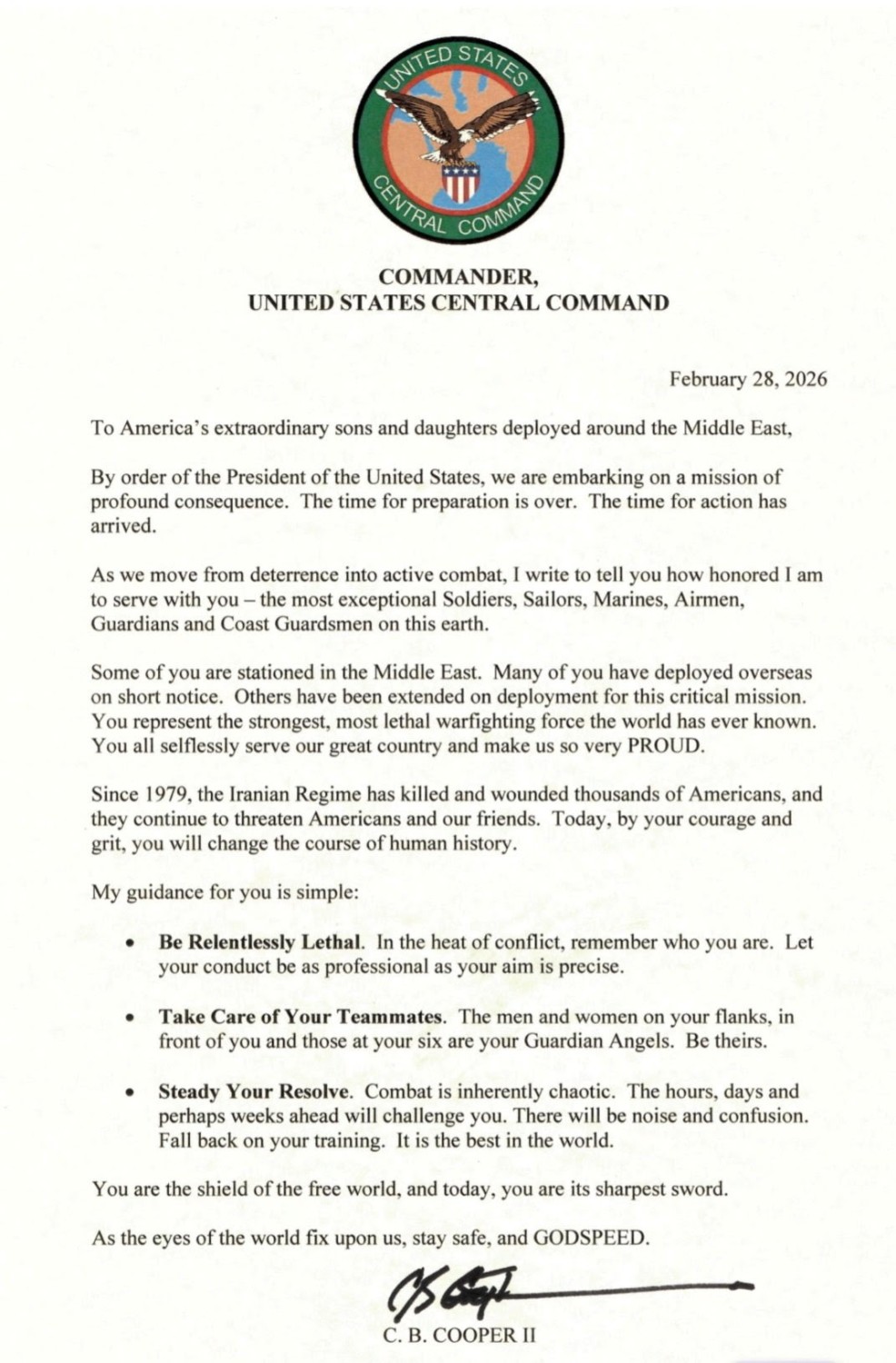
Next, Freight Caviar shared a link to a video that does an excellent job of explaining the significance of the Strait of Hormuz and the countries most impacted by its current closure. Click image for the video source.
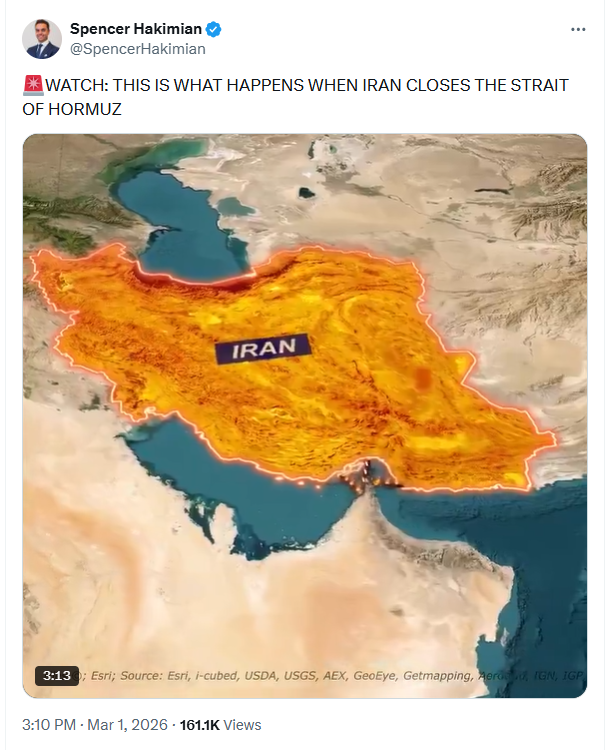
From the NYT on the morning of 3/3:
Strait of Hormuz: A senior Islamic Revolutionary Guards Corps official vowed that “not a single drop of oil” would go through the strait, which about one-fifth of the world’s supply passes through. Markets have fallen as oil prices surge.
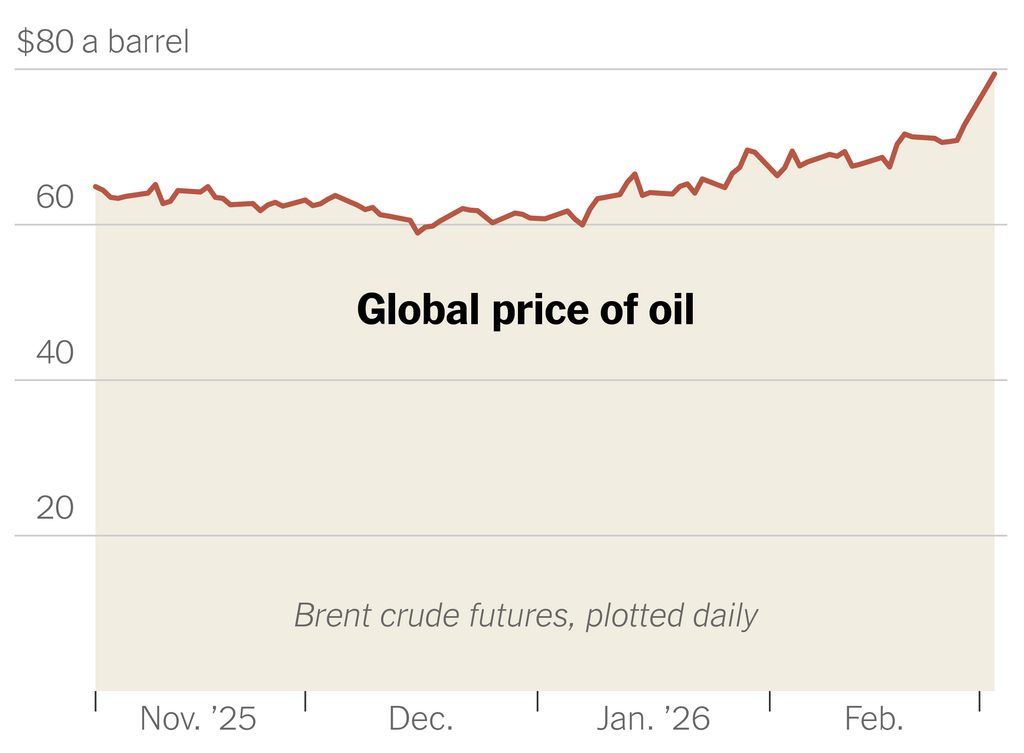
Phil Rosen provided this incredibly helpful summary of how markets are reacting to the war in regards to oil prices.
"Crude moves
The conflict in Iran is already pushing oil prices higher but that doesn’t mean a drawn out supply shock is coming for markets.
Crude surged double digits in overnight trading, but the move looks more like a risk premium than evidence of missing barrels.
Unless exports, shipping lanes or Gulf infrastructure takes a meaningful hit, this volatility spike isn’t likely to usher in a new $100-a-barrel oil regime.
Markets are reacting to sudden conflict, not confirmed supply destruction.
Indeed, US crude prices’ fair value is estimated at $67 a barrel, according to Bloomberg Intelligence analysts.
For oil to hold above that level would require more than uncertain headlines.
“Despite geopolitical tension, global inventories remain robust on land and at sea, and the physical market is fairly well supplied,” said Bloomberg Intelligence energy analyst Salih Yilmaz, CFA.
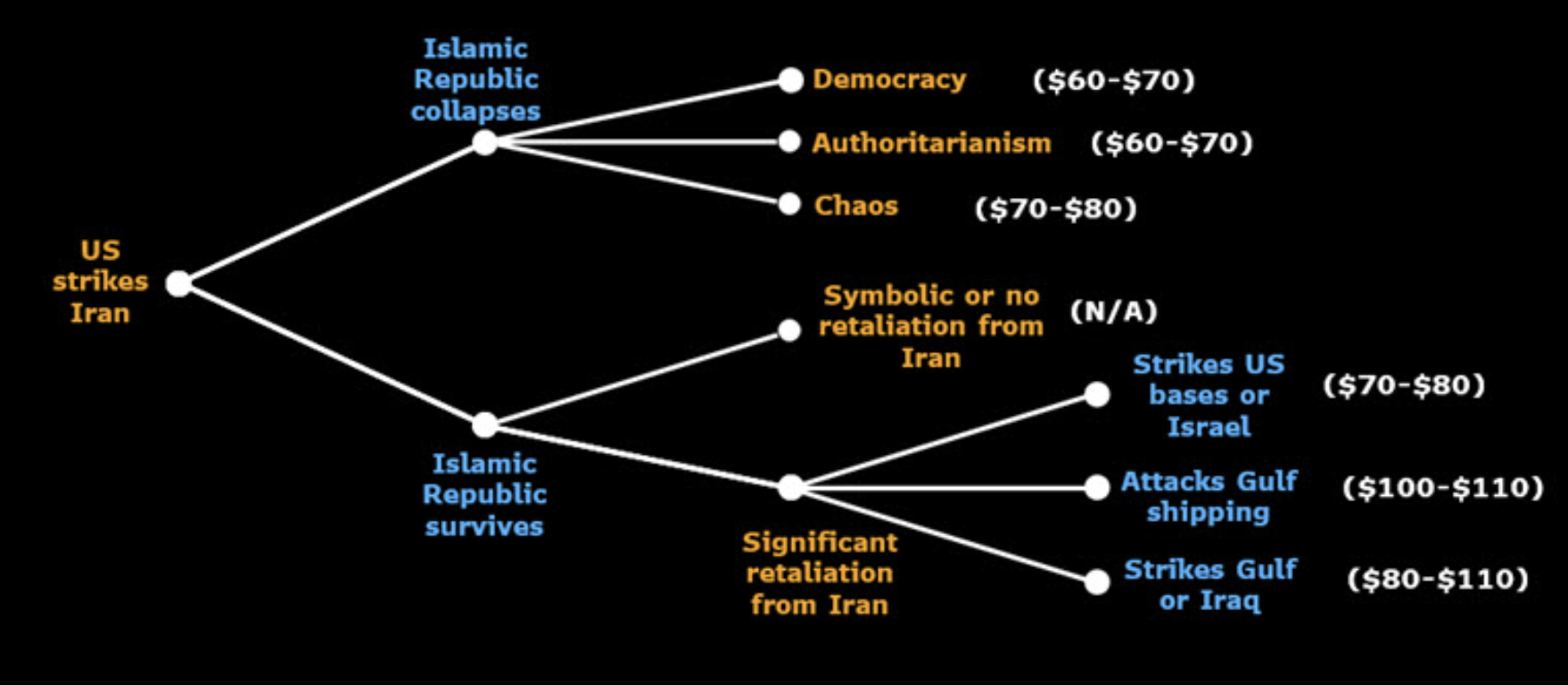
That helps explain why the move, while sharp, does not yet resemble a classic supply shock.
Other indicators have not blown out in a way that signals inventory tightness, and the futures curve still implies muted pricing several months ahead.
The market’s baseline appears to be that as real as the escalation risk is, an enduring supply shock is a separate matter.
Without damage to export terminals or damage in the Strait of Hormuz, gravity tends to reassert itself in oil.
That pattern mirrors the broader market response to geopolitical shocks.
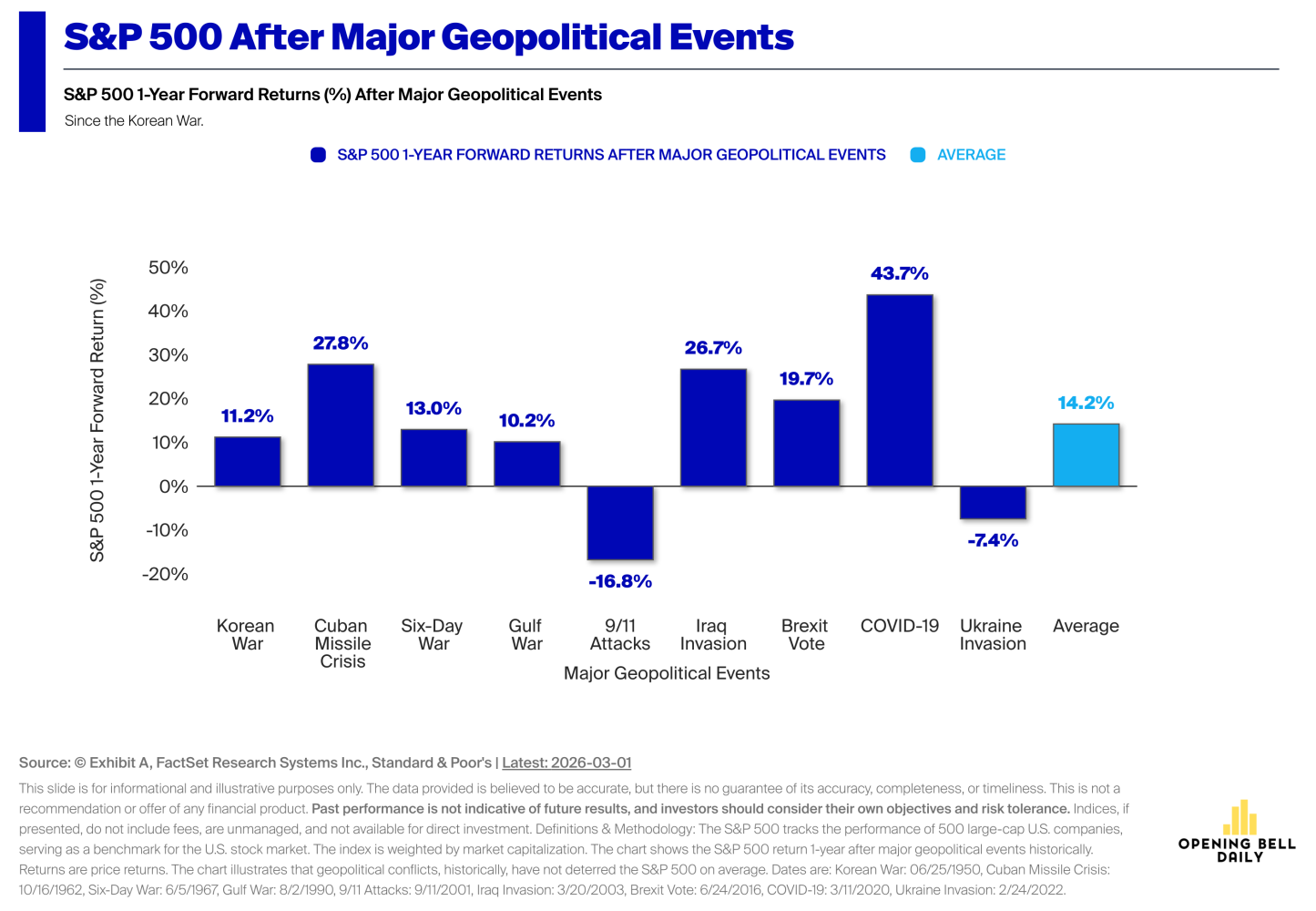
The S&P 500 has averaged a 14.2% return in the 12 months following major conflicts since 1950.
Investors — across oil and equities — are prone to quick recalibrations once it becomes clear that fundamentals have not materially changed.
For now, history suggests the surge in crude prices reflects caution and hedging rather than structural scarcity.
The smart money is betting the barrels keep flowing."
Here is the catch. As of 3/3 we are getting reports that there has been damage to oil infrastructure in some Middle Eastern countries, and in addition, oil exports are struggling due to the closure of the strait. So while the markets were originally hedging mostly due to volatility and risk, they may soon have to start pricing in missing barrels of oil if the conflict creates ongoing production and distribution constraints. Bloomberg held an hour long webinar to cover all things conflict in the Middle East and Oil this morning. I listened to it so you don't have to, here are the cliff notes:
The first topic of interest I noted is what seems to be the reality of modern warfare. Drones. Drones are proving to be incredibly effective in increasing chaos and landing blows. And the best part about a drone? It is relatively cheap. Drones cost between $20,000-50,000 dollars to produce and launch. To intercept a drone with an interceptor defense missal will cost you $4.9M dollars. Iran has launched over 500 drones. Hence their successes at landing some blows against targets throughout the Middle East. From an economic standpoint, it's not feasible to continue to use $4.9M missals to stop $20k drones from landing their blows. It is unclear how many drones Iran has at their disposal. Interestingly enough, we do know more about drone warfare now because of the war in Ukraine. The drones Iran is using are the same drones Russia created and launched in the war against Ukraine. It's unclear how much of that technology Russia has already provided to Iran, and if Iran can continue to produce them themselves or if they are working through stockpiles. Experts say that analyzing the war in Ukraine could offer some insights on how to combat drone warfare. In addition to all of this, the US has not been purchasing or producing these defense missals in the amounts needed to replenish the amounts we are currently expending. It was noted that war strategy may become dependent on the tolerance of each country to leave themselves vulnerable to future attacks by emptying too much of their inventories in this conflict.
Now back to oil...
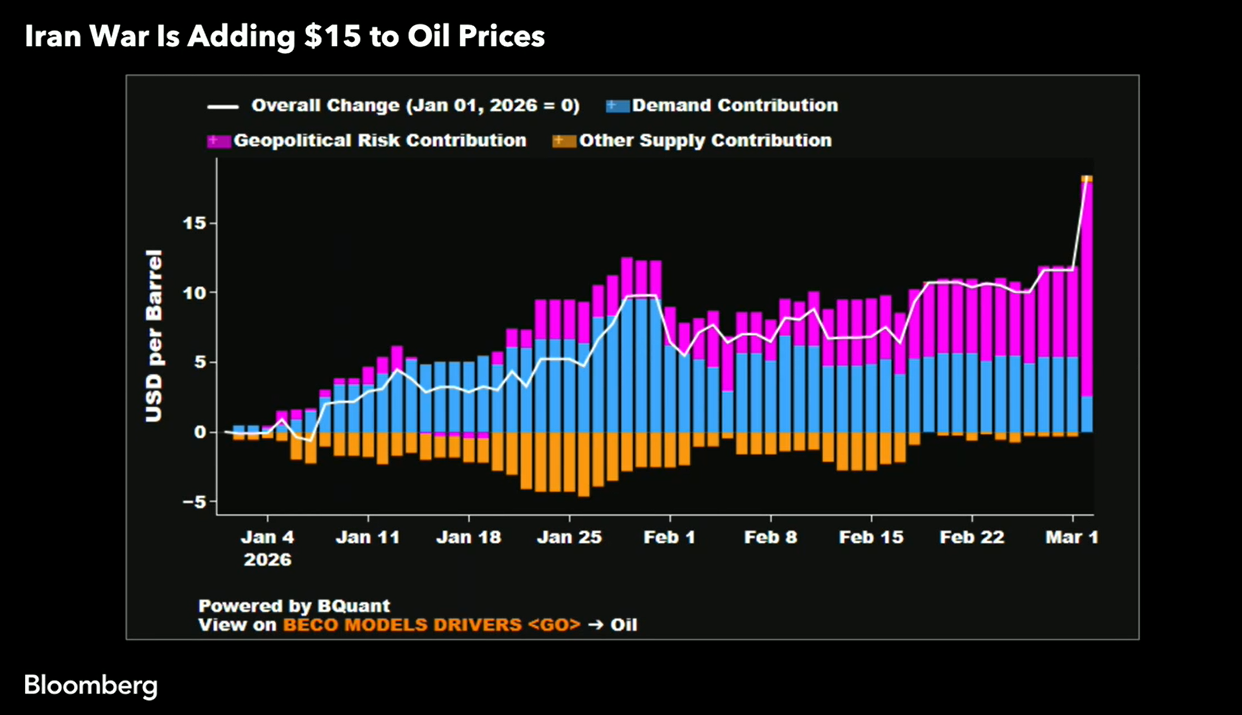
The rule the Bloomberg analysts go by when estimating oil impact is that If you lose 1% of supply (crude barrels) it is a 4% price increase (price per barrel). Hormuz is 20% of global supply, so an 80% increase in cost would be applied.
The first graph was created on 3/2, as of 3/3 the cost is now $85/barrel and up $20 instead of $15. This graph is pricing in mostly just risk and reaction to conflict, as of 3/3 we are starting to get signals that actual missing barrels might begin affecting the pricing to the tune of the 1:4 price increase ratio.
If that were to happen, the second graph shows an estimate of at least $108 per barrel, and also displays the impact to GDP for major countries.
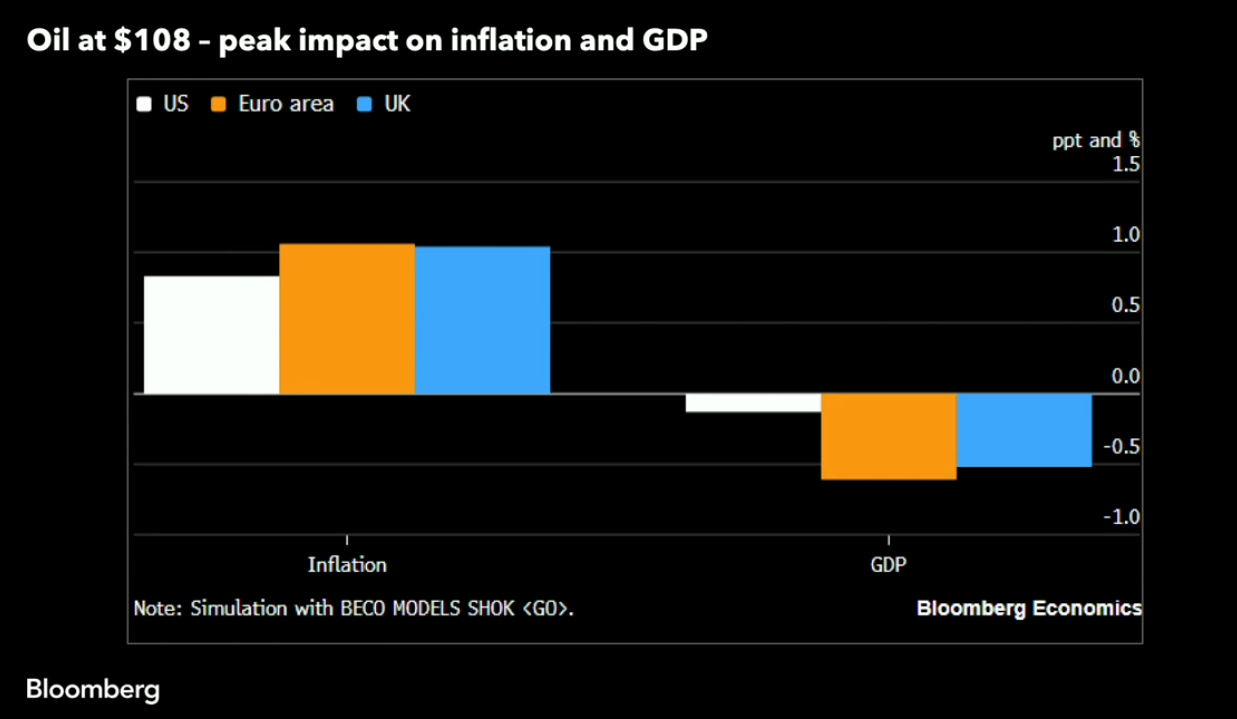
Why is the US the least affected? Because in recent years the US has become less dependent on crude imports. While we do still import, we also provide much of our own oil, and have the ability to continue to do so through this disruption.
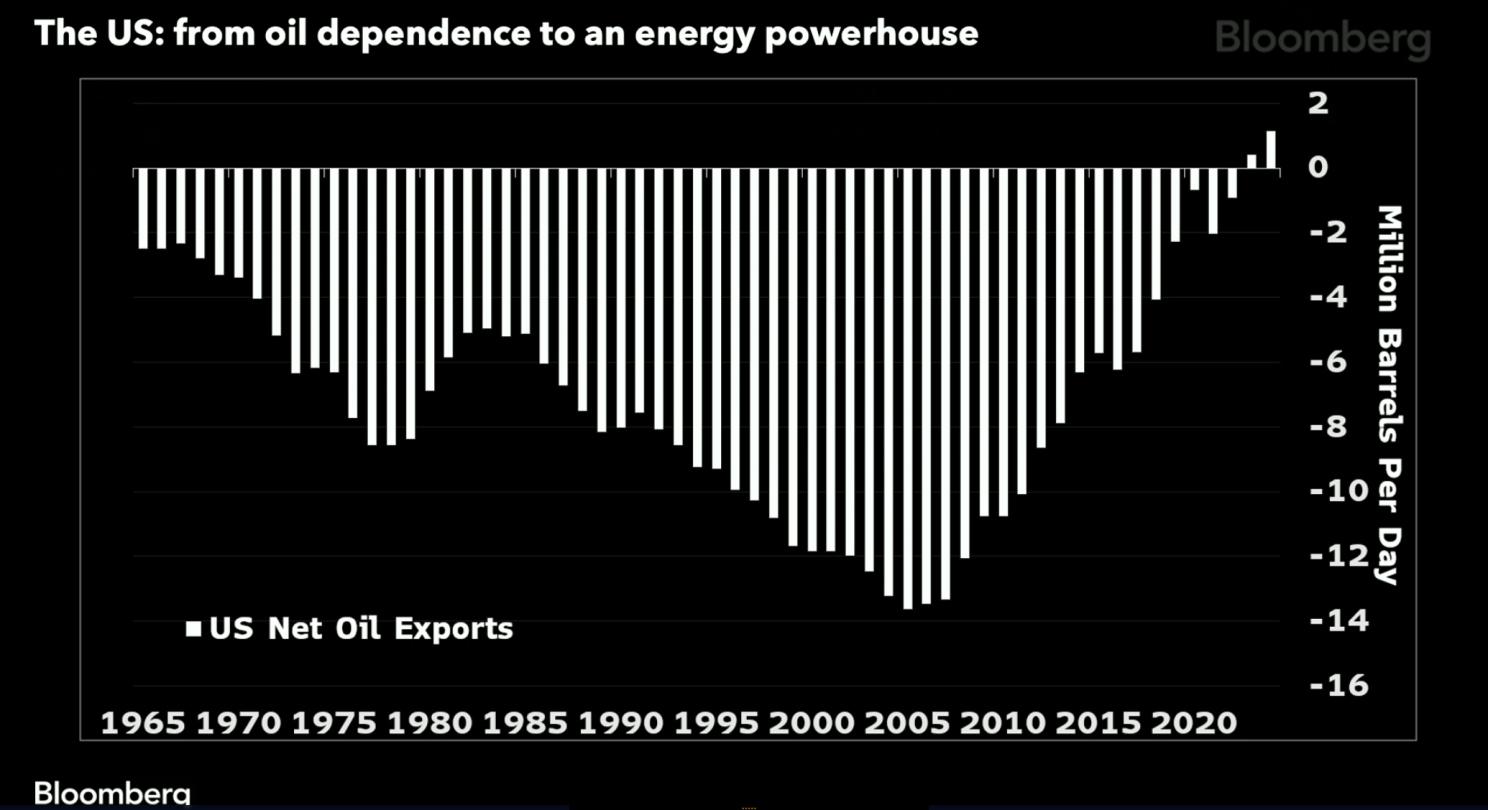
However, most countries cannot say the same. So, who will be most impacted by the closure of the Strait of Hormuz, and the loss of 20 Million barrels of oil per day into the global economy?
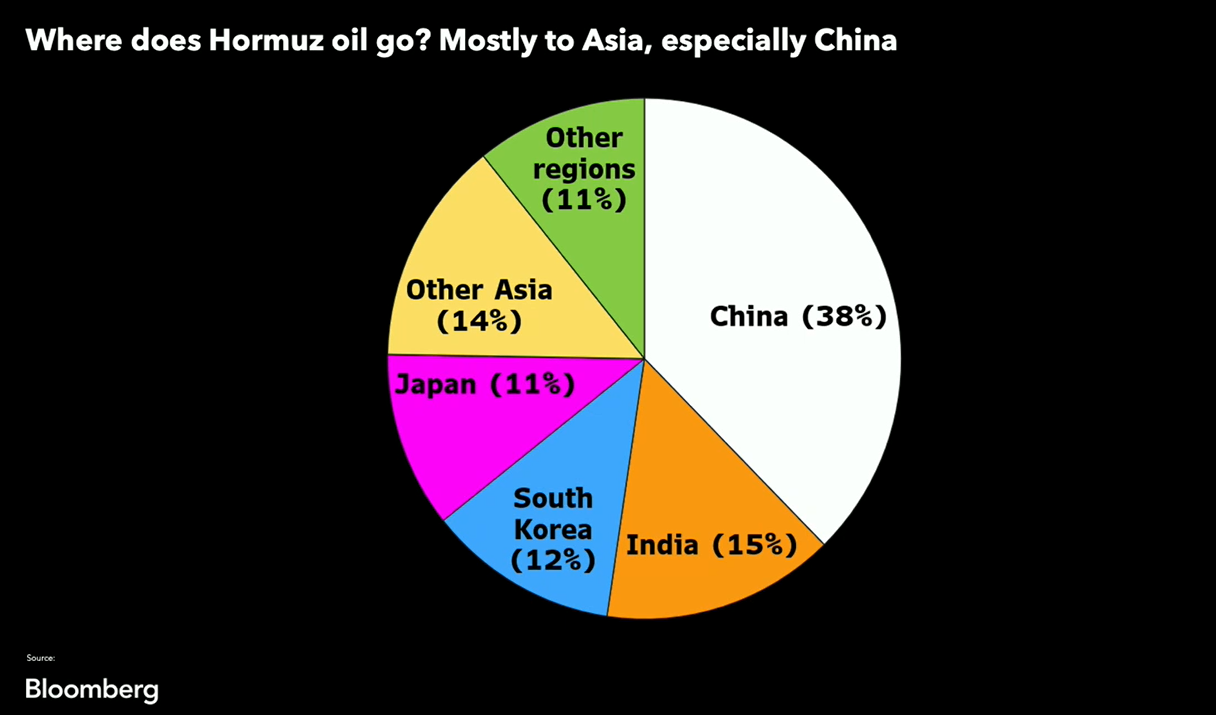
Based on import volumes from oil that passes through the Strait by country, China is most impacted. China was also importing crude from Venezuela and Iran. Two nations now focused on conflict and regime changes.
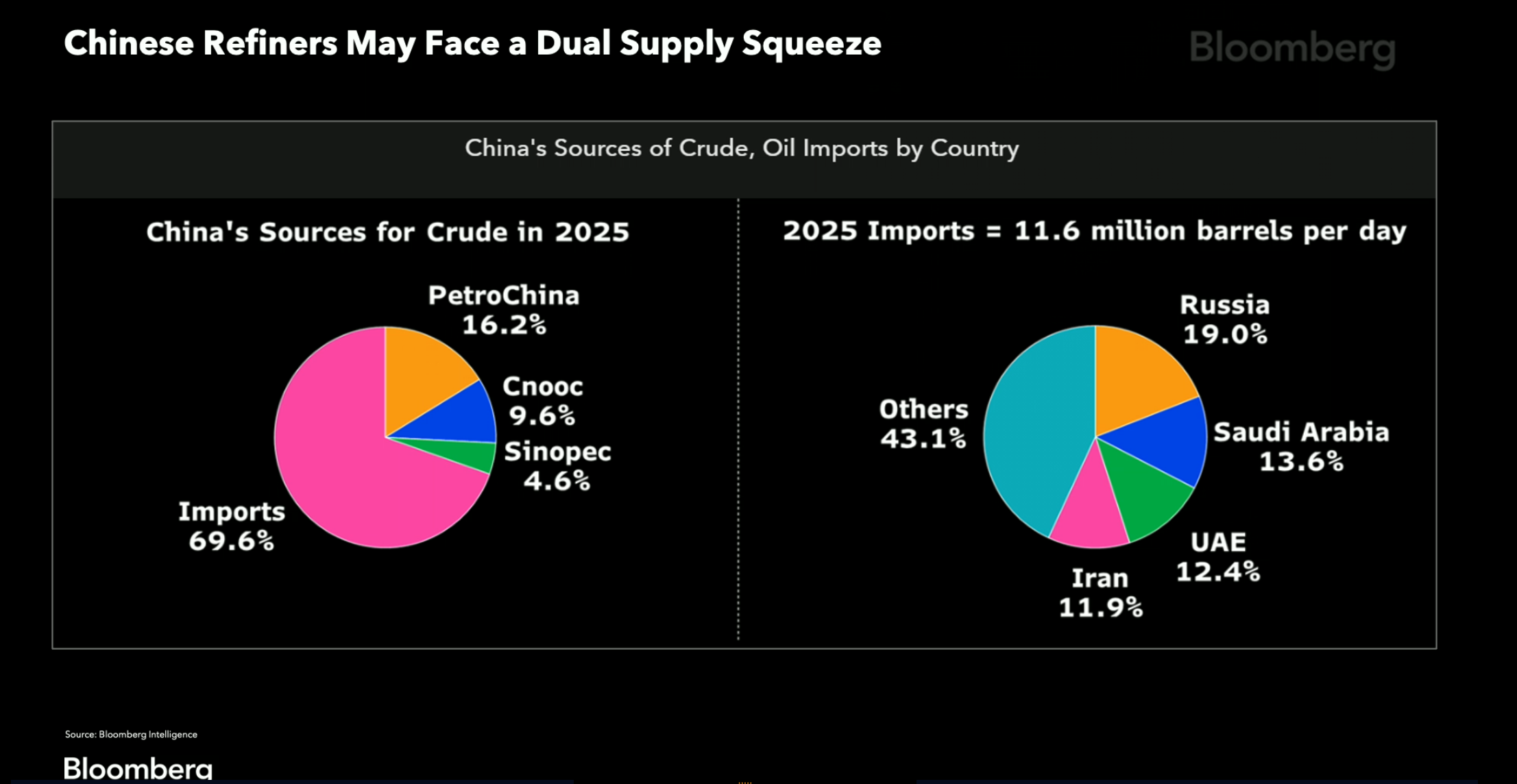
So then, can OPEC make up for the loss of 20M barrels of oil per day? No. While there are inventories that could support a short term conflict, if this war extends and production needed to ramp up, it's currently estimated that OPEC can supply 3.5-5M more barrels per day in the near future, not even close to the 20M barrels that will be missing. In addition, OPEC has never tested this level of production in recent years, and logistics would still present a challenge to distribution. So who wins and who loses in a scenario where there is a shortage of crude oil and prices rise? Theoretically the winners are countries who can produce their own and sell at increased rates, the losers are those who are dependent on impacted countries for imports who will have to go to the market to purchase crude and negotiate deals with other countries as suppliers. However, it's already not so black and white. Iraq, at the top of the "winners" list, is currently shutting down production at their facilities due to their storage space being at max capacity and a bottleneck in trying to move oil exports out without the Strait of Hormuz being open.


Additional Notes From the Webinar:
If we truly lose 1/5th of the world's crude oil over the course of this week, all economies will feel it. Various pressures will start being applied where they can be to restore oil exports from the Strait. We have no idea what this might look like, but generally speaking, most countries are not willing to risk the strength of their own economy to sustain a war that is not even on their own turf. Energy and gasoline prices are already increasing for everyday consumers. In the US, as of March 3, the national average for a gallon of regular gasoline jumped 11 cents overnight to approximately $3.11. This is the largest single day increase in prices since March 2022 during the Russia-Ukraine war. In addition, if China and India are unable to procure enough oil through a sustained disruption, they could be forced to use their reserve stockpiles (which China has been creating the last couple of years), or cut economic activity. This could have ripple effects across countries who trade with China and India.
There are two things to keep an eye on to gauge the impact oil will have on global economies and the outcome of this war:
I will also close with a quote Phil Rosen shared on his morning newsletter today that struck accord with me. The topic of conversation was on how Israel's primary stock index has gained over 66% the last 12 months, and even 4.6% this week. Conflicts present an opportunity for a new period of certainty to settle in as new order comes after the conflict. Regardless of the new order, there is some degree of certainty for markets when they know the direction things are heading. And as Phil said:
It’s true that wars are destructive in the near-term, but they can also clarify long-standing uncertainties.
Thanks for reading! Please comment any additional resources you are leaning on regarding these topics so we can all learn from one another! You can message me with any questions or comments!