


The job market is a living, breathing ecosystem, and if the past few years have taught us anything, it’s that business leaders must stay agile to survive. As we navigate through 2026, the landscape of hiring, talent acquisition, and workforce management is shifting yet again.
Whether you are a startup founder looking to scale or an executive at an enterprise-level corporation, understanding the nuances of this year's job market is no longer optional—it is a critical component of your revenue strategy.
Recently, on the Meet Me For Coffee podcast, host Samantha Jones sat down with Blake Collins, a supply chain and talent acquisition expert from Armada Staffing Group, to unpack exactly what is happening on the front lines of hiring.
Here are the critical 2026 job market trends every business leader needs to know.
One of the most fascinating paradoxes of the current job market is the simultaneous frustration from both sides of the hiring table.
If you ask hiring managers, they will tell you, "We just can't find good talent." But if you ask active candidates, they are saying, "We can't find any good companies to work for."
How can both statements be true at the same time? It comes down to a concept of alignment: finding the right person for the right seat. There is plenty of exceptional talent in the market, and there are thousands of incredible companies looking to hire. The friction occurs when companies fail to clearly define the role, the culture, and the expectations upfront.
When a highly skilled professional is placed in the wrong seat, performance drops, frustration rises, and turnover is inevitable. In 2026, successful companies are prioritizing rigorous alignment over simply putting a "body in a seat."
For the past couple of years, economic uncertainty, inflation, and post-pandemic adjustments created a noticeable hesitancy in the market. Companies were operating with leaner teams and holding off on expansion.
In 2026, that ice is beginning to thaw.
We are seeing a massive uptick in hiring confidence, particularly in Q1. Historically, the first quarter is driven by one primary goal: revenue generation. Companies are actively seeking top-tier sales professionals and business development leaders to ensure they hit their annual targets.
However, candidates have changed how they evaluate offers. Because of the ongoing impacts of inflation—where a trip to the grocery store feels noticeably more expensive—candidates are demanding higher base salaries. Furthermore, they are prioritizing stability over risky equity plays. They want to know your company has a solid foundation before they make a leap.
You can’t discuss the 2026 job market without addressing the elephant in the room: Artificial Intelligence and robotics.
For years, the fear has been that AI and automation will completely replace the human workforce. However, the reality we are seeing on the ground is much more nuanced. AI isn't necessarily eliminating jobs across the board; rather, it is forcing roles to evolve.
Companies in sectors like logistics, supply chain, and manufacturing are heavily investing in robotics and AI software to streamline operations and save money. But these machines and algorithms do not run themselves.
We are witnessing the creation of entirely new job categories. Companies now need professionals who can manage AI workflows, implement software safeguards, and oversee robotic integrations. The leaders who succeed in 2026 will be those who figure out how to harmoniously blend human ingenuity with artificial intelligence.
When hiring confidence returns, there is a temptation to move too fast. But rushing the process often leads to bad hires, and the cost of a bad hire in 2026 is astronomical.
When you hire the wrong person, the financial hit goes far beyond their salary. You lose the money spent on recruitment, onboarding, training, and equipment. More importantly, you lose time—often three to six months of lost productivity that your competitors are using to get ahead.
Furthermore, a bad hire can severely damage your team's morale and culture. It is always better to leave a seat empty a little longer than to fill it with someone who doesn't align with your company’s core values and objectives.
So, how can you adapt your hiring strategy to win top talent in 2026? Here are three actionable steps you can implement today:
Before you even post a job description, sit down with your leadership team and define exactly what success looks like for this role. What must this person achieve in the first 3 months? The first 6 months? The first year?
If you cannot clearly articulate the goals of the position, you are not ready to interview candidates. Candidates are looking for clear direction and leadership, and ambiguity is a massive red flag for top-tier talent.
The best person for your open role might not be actively looking for a job. These "passive candidates" are currently employed, performing well, and relatively happy.
To win them over, your value proposition must be airtight. You need to offer a superior culture, better stability, or a more exciting growth trajectory. Relying solely on job boards won't cut it; you need to actively network, build relationships, and perhaps partner with specialized recruiting firms to tap into this hidden talent pool.
Stop trying to sell a perfect, utopian vision of your company. Candidates in 2026 are savvy, and they can see right through it.
Instead, practice radical transparency. Be honest about the challenges the company is facing, the pace of the work, and the realities of your culture. If your environment is high-stress and fast-paced, say so. The right candidate will be energized by the challenge, and the wrong candidate will self-select out—saving you both a tremendous amount of time and money.
The 2026 job market is full of incredible opportunities for business leaders who are willing to adapt. By focusing on true alignment, embracing technological advancements like AI, and refining your hiring processes, you can build a resilient, high-performing team.
Stop settling for the wrong talent, and start building a hiring strategy that actually drives your business forward.
Looking to optimize your hiring strategy or scale your team this year? Evaluate your current processes, define your success metrics, and don't be afraid to partner with talent acquisition experts who understand the nuances of your industry.


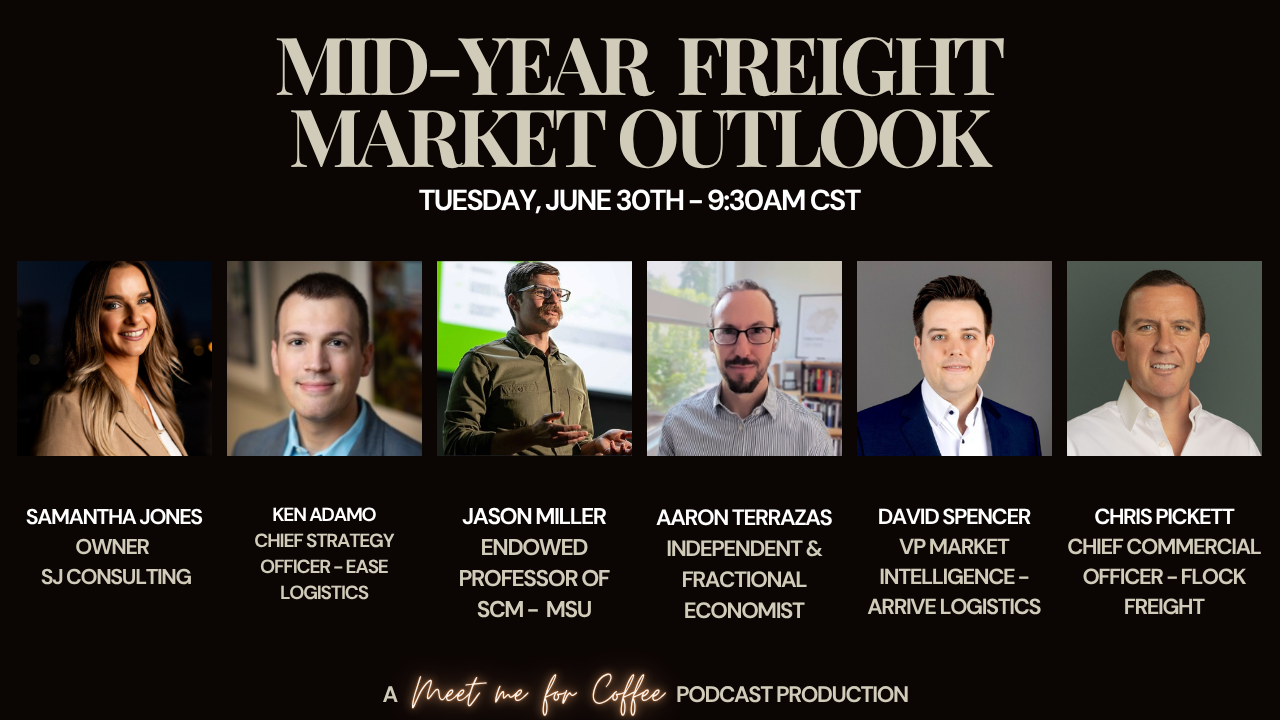
This month's Newsletter is a written format of the Meet Me For Coffee Podcast Panel. If you need strong sources to cite in your planning and research these days, I'd highly recommend giving this a read!
Read More
The June Truckload Market Update is out. It covers corporate earnings and profits, consumer spending, inflation, wages, manufacturing, and truckload rate environments.
Read MoreRead the May Truckload Market Update for expert insights on fuel prices, freight rates, inflation, and AI. Plus, grab a $1,400 Manifest Las Vegas discount code!
Read More